Other work

Other work / Live web application

Mistfall
Atlas

From game rules to a build you can use

I connected search, comparison and calculators around one player question: what equipment will actually meet my targets?

Open the live product
Product

Published planning application

Core workflow

Build Studio · calculators · reference data

Data layer

4,140 entities · 14,511 relations in the reviewed September 2026 release

My role

Product direction · UX/UI · AI-assisted build

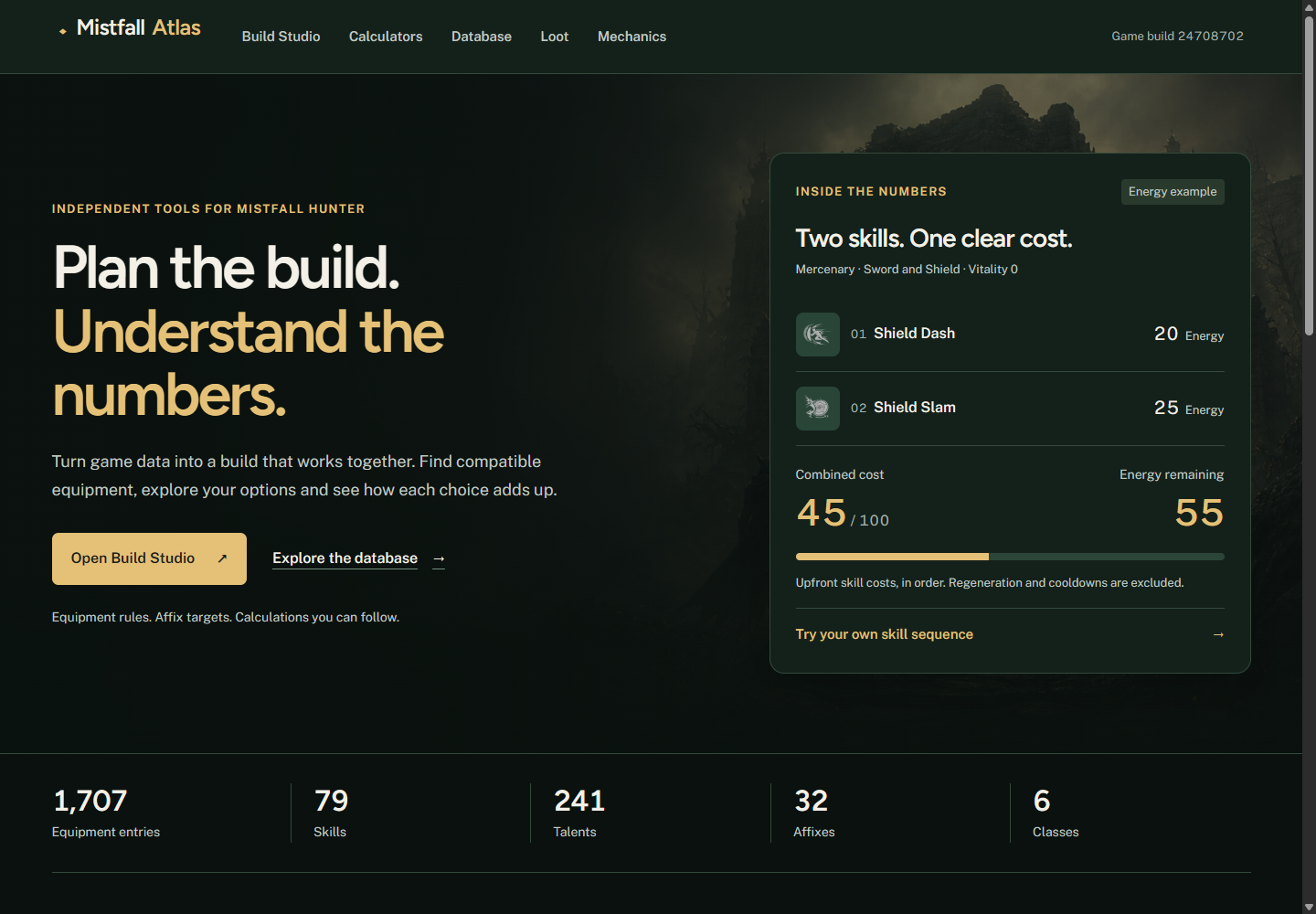
Mistfall Atlas homepage introducing build planning and explaining an energy calculation View full size
The live product brings build planning, calculators and reference data into one place.

The problem

A build is a network of dependent choices.

The strongest-looking item can still produce an invalid build.

Class and weapon compatibility, nine equipment slots, rarity limits, affix targets, sockets, gems and talents all change what is legal. The same choices then affect damage, health and energy calculations.

My design goal: keep those choices connected. A player should be able to find a valid equipment set, apply it and continue calculating without rebuilding the same setup in separate tools.

One decision loop

From a target to an applied loadout.

The product keeps the question, constraints and result visible as the player moves through the build.

  1. 01Choose context

    Select a class and compatible weapon.

  2. 02Set constraints

    Define affix targets and a rarity ceiling.

  3. 03Compare results

    Inspect legal sets and their meaningful differences.

  4. 04Apply and refine

    Fill all nine slots, then save or share the build.

Three product decisions

Make complexity useful, visible and bounded.

Each part of the interface answers a practical question while preserving the limits behind the answer.

01

Compatibility

Search only inside the supported build space.

Build Studio combines class, weapon, slots, gems, targets and rarity rules before it presents a candidate.

Product effect Results are inspectable equipment sets, rather than plausible suggestions that may break a rule.
02

Honest optimization

Distinguish a proven minimum from the best found.

The search works within a budget. Its language states when a minimum is established and when the result is simply the best candidate found for the selected rarity objective within that boundary.

Product effect The interface communicates useful certainty without claiming a global optimum it has not proved.

03

Connected data

Use reference content as product infrastructure.

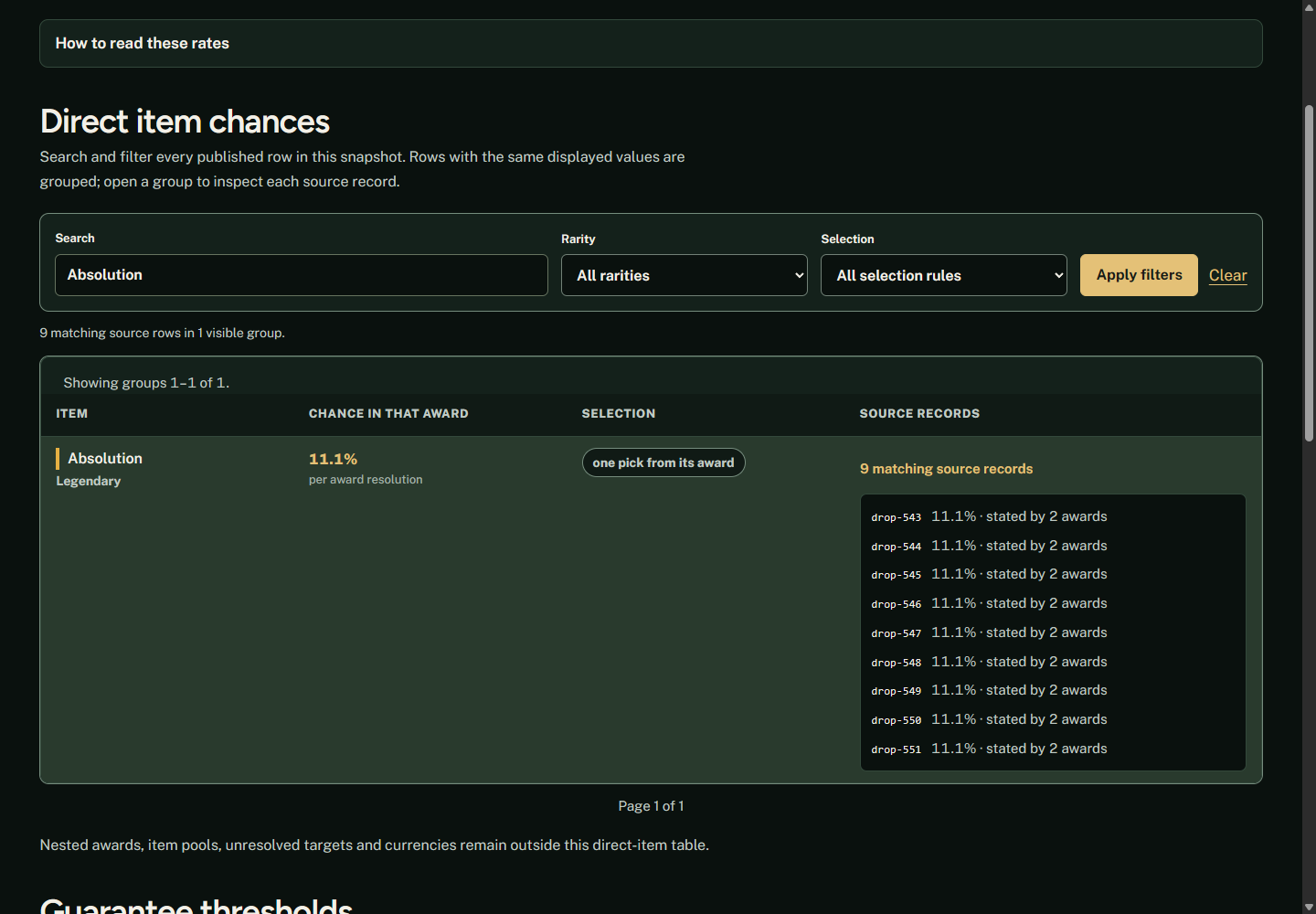
Equipment, affixes, gems, skills, talents, loot and mechanics remain linked through structured entities and relations.

Product effect Search and filters lead back to build choices; the database is part of the workflow, not a detached wiki.

A change that mattered

Three results should not take three pages.

The first layout made every equipment detail equally prominent. Looking at the results together exposed the problem: the interface made comparison harder than it needed to be.

Before

Read each full equipment set.

All nine slots, gems and target details were expanded for every result. To compare three options, the reader had to scroll through repeated information.

After

Compare first. Inspect when needed.

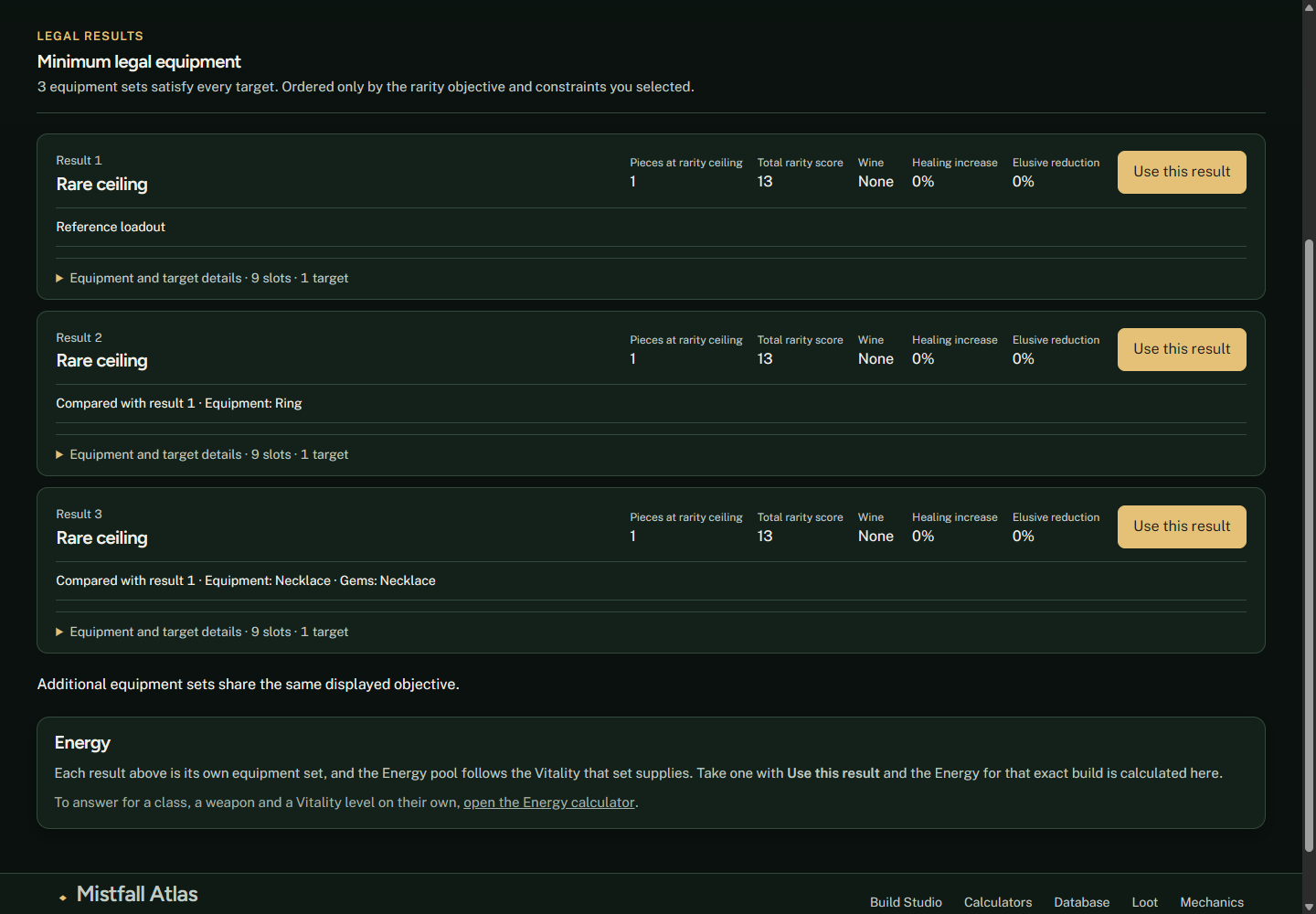
I brought the key numbers and differences into compact summaries. Equipment details stay available in a disclosure, with an explicit action to apply the chosen result.

Three compact Build Studio results with differences, key values, expandable equipment details and Use this result actions View full size
The revised interface puts the comparison ahead of the full equipment inventory.

Calculators and discovery

Show the model beside the answer.

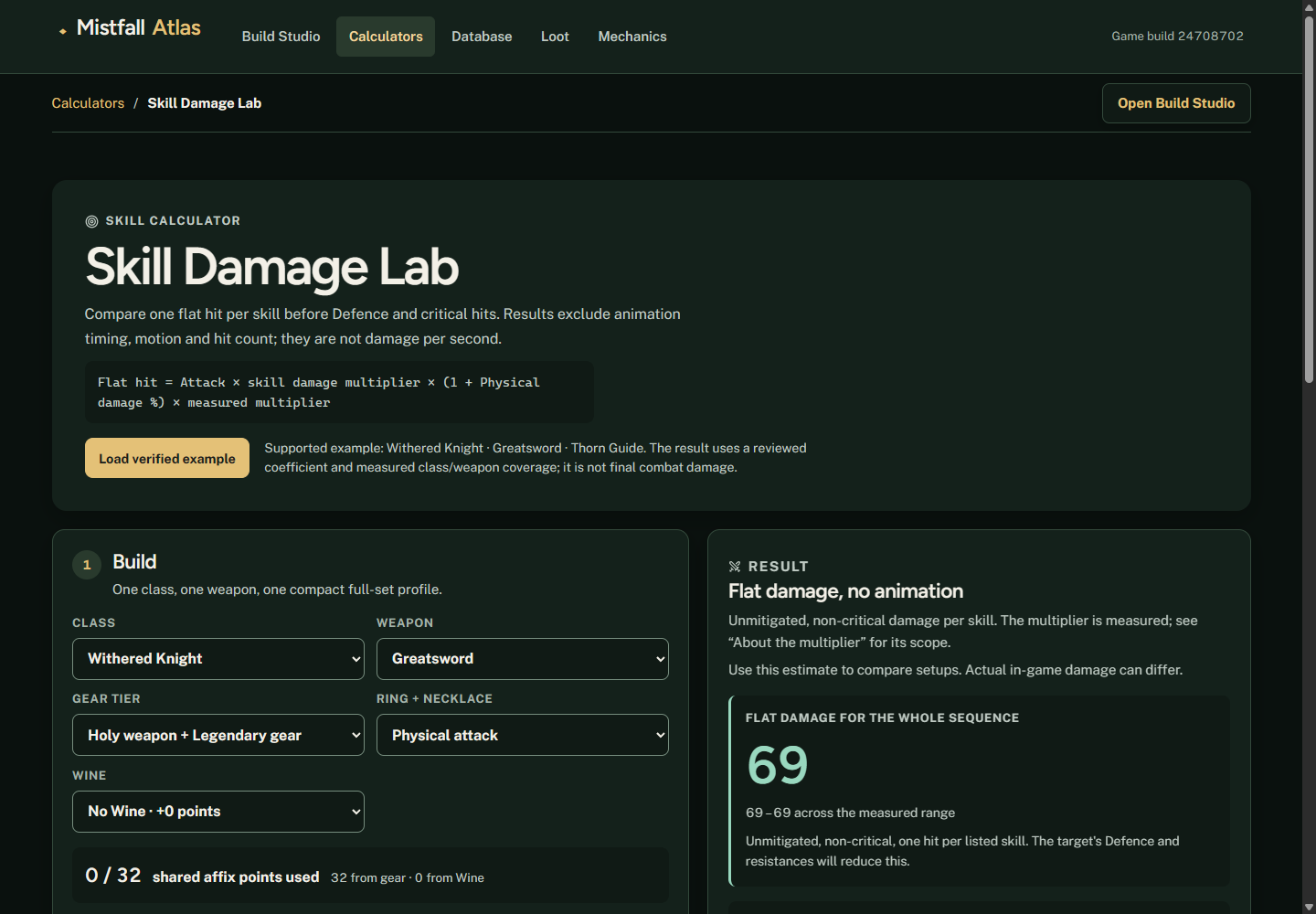
Editable inputs, supported examples and explicit omissions help players compare setups without hiding assumptions.

Checking the result

Follow the build all the way through.

I checked the complete path from setting a target to applying a result on the published product. Local checks also followed the build through saving and reloading, with all nine equipment slots and the active target preserved.

The compact comparison is a concrete improvement to the interaction. It is not presented as a measured gain in player performance or adoption.

Technical release checks
  • Published page, status and asset checks, including exact asset checksums.
  • Page templates and detail variants checked at 320, 390, 768 and 1440 pixels.
  • Local solve, apply, save and reload verification retained 9/9 equipment slots, the socket and active target. Live checks separately confirmed solve and apply.

The calculators preserve the formulas shipped in the product. This case does not claim that those formulas were independently derived or canonically validated against the game.

My role and result

Direct the product, then make it reproducible.

I set the product direction, workflows and UX/UI, then used AI and Codex for implementation and testing.

The work connected the existing relational data and calculation logic to a clearer planning loop. I refined comparison, calculator onboarding and responsive presentation, and prepared a repeatable published release.

What I took away: a complete answer can still be difficult to use. Choosing which detail to show first mattered as much as making the calculation available.

Result. Mistfall Atlas is live as a coherent application: players can research a mechanic, find legal equipment, apply a complete loadout and test supported calculations without losing the build context.

Game artwork, names and mechanics belong to Mistfall Hunter and its rights holders. Mistfall Atlas is an independent community tool.

Applications, product work & collaborations

Have a complex system to make clear?

Tell me what people need to decide, which rules shape the answer and where the current workflow breaks down.